Field trip
9:00am - 3:15pm
Birdwatching excursions/ pre-conference workshops
Workshop
2:00pm - 6:00pm
PRE-CONFERENCE WORKSHOP 1: SHOREBIRD SCIENCE FOR CONSERVATION
Workshop
3:15pm - 6:00pm
Welcome and Registration
welcome speech
9:00am - 9:30am
Welcome addresses
Plenary
9:30am - 10:15am
Plenary #1
Break
10:15am - 10:45am
Coffee break
Plenary
10:45am - 11:30am
Plenary #2
Plenary
11:30am - 12:00pm
Youth plenary
Poster session
12:00pm - 1:00pm
Poster session
meal
1:00pm - 2:00pm
Lunch break
talk
2:00pm - 3:30pm
Symposia sessions
Break
3:30pm - 4:00pm
Coffee break
talk
4:00pm - 5:30pm
Symposia sessions
discussions
5:30pm onwards
Roundtable discussions
excursion
7:00am - 9:30am
Birdwatching excursions
Plenary
9:30am - 10:15am
Plenary #3
Break
10:15am - 10:45am
Coffee break
Plenary
10:45am - 11:30am
Plenary #4
Plenary
11:30am - 12:00pm
Youth plenary
Poster session
12:00pm - 1:00pm
Poster session
meal
1:00pm - 2:00pm
Lunch break
talk
2:00pm - 3:30pm
Symposia sessions
Break
3:30pm - 4:00pm
Coffee break
parallel-sessions
4:00pm - 5:30pm
Symposia sessions
dinner
6:30pm
Conference dinner
parallel-sessions
9:30am - 11:00am
Symposia sessions
Break
11:00am - 11:30am
Coffee break
parallel-sessions
11:30am - 1:00pm
Symposia sessions
meal
1:00pm - 2:00pm
Lunch break
talk
2:00pm - 3:00pm
Plenary #5 + voting for best talk/poster
Break
3:00pm - 4:00pm
Awards and closing ceremony
excursion
7:00am - 3:00pm
Birdwatching excursions
Plenary Speakers

Prof. Ryan Chisholm

Prof. Ryan Chisholm
Professor
Department of Biological Sciences, National University of Singapore

Ryan Chisholm completed a BSc in Mathematics and Statistics (with Honours in Botany) and a BA in German at the University of Melbourne, and then did his MA and PhD in Ecology and Evolutionary Biology at Princeton University. He had a two-year post-doctoral appointment at the Smithsonian Tropical Research Institute in Panama and then moved to the National University of Singapore as an Assistant Professor in 2012, and was promoted to Associate Professor in 2019. He is interested in tropical forest ecology, biodiversity, ecosystem function, and extinctions. He published a number of papers exploring the mechanisms that maintain diversity in ecological communities using a combination of theory, observation and experiment. A highlight was a paper with Lynette Loke in Nature in 2023, for which he won the Ecological Society of America's George Mercer Award. He also have a substantial body of work focused on estimating historical extinction rates in Singapore over the last 200 years. This culminated in a paper in PNAS in 2023 looking at extinction rates among ten taxonomic groups.

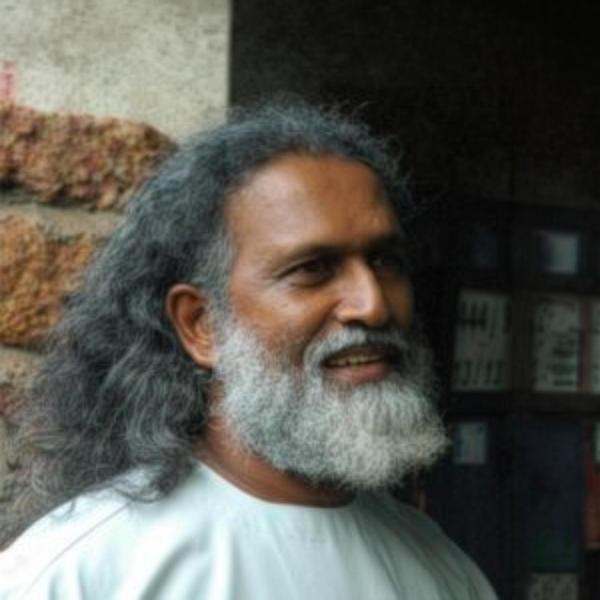
Prof. Sarath W. Kotagama

Prof. Sarath W. Kotagama
Professor Emeritus
Department of Zoology and Environment Sciences, University of Colombo

Sarath W. Kotagama is widely recognized as Sri Lanka’s foremost ornithologist and conservation biologist, with an illustrious career spanning over five decades. His pioneered studies on mixed-species bird flocks, avifaunal ecology, and conservation strategies in tropical forests. He has authored numerous books and over 100 scientific publications, including the widely acclaimed An Illustrated Guide to the Birds of Sri Lanka. He served as chairman of BirdLife Asia Council and Council Member of BirdLife International Global Council (2015–2023). He was also the secretary general of the Pan Asian Ornithological Congress (1996–2000). He is the recipient of the Vidya Jothi National Award (2017), multiple Presidential Awards for Scientific Research, and the Distinguished Achievements Award for Extraordinary Service in Conservation by the Society for Conservation Biology, USA.

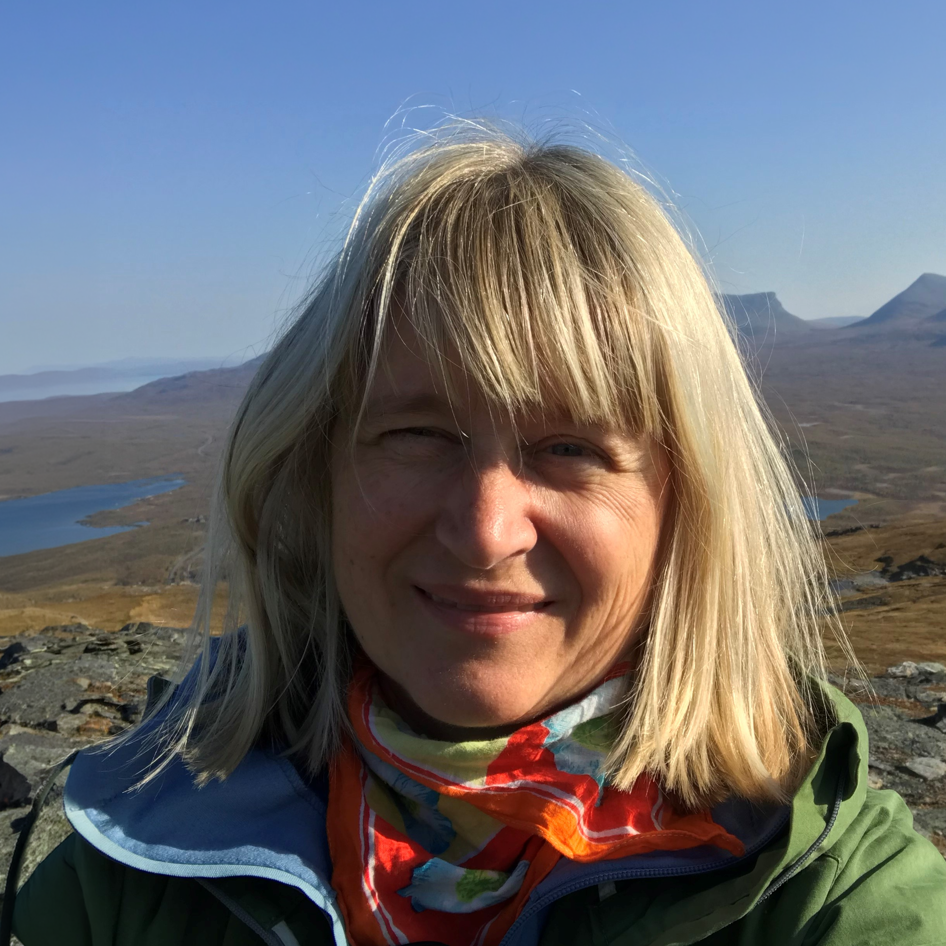
Prof. Susanne Åkesson

Prof. Susanne Åkesson
Professor
Centre for Animal Movement Research, Lund University

Susanne Åkesson completed a PhD in Animal Ecology at Lund University on songbird orientation and migration in 1995. During a 2-year postdoc period at the Department of Zoology at Zürich University she studied landmark navigation in desert ants, whereafter she returned to the Department of Biology at Lund University in 1998 and started her career as a junior scientist investigating long-distance migration and navigation in birds and sea turtles. Since then, Susanne Åkesson has led her own research group (Animal Navigation Lab) and acted as the director for an excellence Center for Animal Movement Research (CAnMove) 2008-2020 at Lund University. She has led research projects on several expeditions to the high Arctic. Her current research involves tracking natural migrations using multi-sensor loggers and controlled lab experiments investigating the phenotypic characteristics of the endogenous migration programs in songbirds. The focus lies on behavioral and physiological adaptations to long-distance migration, including timing, fueling and space use, but also includes foraging ecology and conservation. Research includes work on songbirds, seabirds, raptors, swifts, and nightjars and are performed on several continents. Susanne Åkesson is a fellow of the Royal Institute for Navigation in London and a fellow if the Royal Academy of Sciences in Stockholm. She has won the Rosén’s Linnaeus Prize in Zoology from the Royal Physiographical Society in Lund and the August Prize for the best non-fiction book in Sweden 2009.

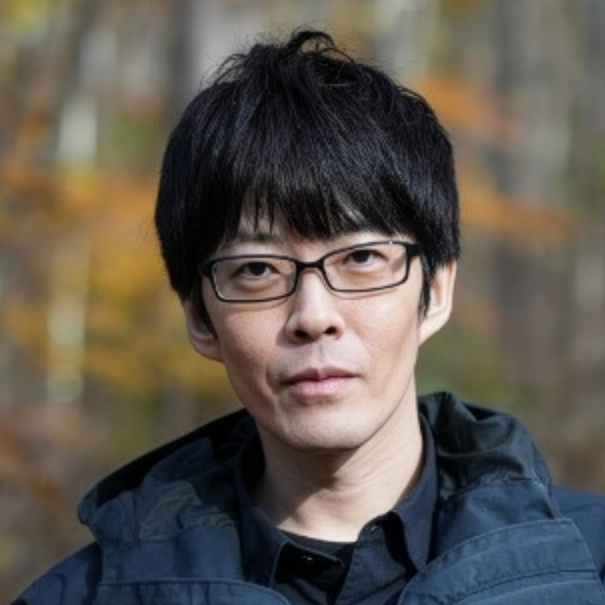
Prof. Toshitaka Suzuki

Prof. Toshitaka Suzuki
Associate Professor
Research Center for Advanced Science and Technology, The University of Tokyo

Toshitaka Suzuki is an associate professor at the University of Tokyo and a leading researcher in animal communication. For more than 20 years, he has studied communication systems of passerine birds, particularly species within the family Paridae, such as the Japanese tit (Parus cinereus minor). His research has revealed several striking parallels between bird communication and human language, including referential signals, compositional syntax, and symbolic gestures. At the same time, he has clarified important differences between bird and human language, providing new insights into the evolution of language and communication. Through these discoveries, he has contributed to establishing a new interdisciplinary field, animal linguistics, which investigates linguistic capabilities in non-human animals using approaches from behavioral ecology, linguistics, and cognitive science. His work has been widely recognized internationally and published in leading scientific journals. He has received numerous academic and public awards in Japan for his contributions to science and education. More recently, he was selected as a Tinbergen Lecturer by the Association for the Study of Animal Behaviour.

Prof. Xingfeng Si

Prof. Xingfeng Si
Professor
College of Life Sciences, Zhejiang University

Xingfeng Si is a professor in the College of Life Sciences at Zhejiang University, China. As a community ecologist and biogeographer, he specializes in bird diversity and plant-animal interactions. His research focuses on how habitat fragmentation, land-use change, and urbanization impact biodiversity and community dynamics. Using the Thousand Island Lake and the Zhoushan Archipelago in Zhejiang Province as natural laboratories and birds as model taxa, he integrates functional and phylogenetic approaches to understand community assembly on islands, biodiversity changes following habitat fragmentation, and the effects of human activities on biodiversity maintenance. He has published around 100 papers in island biogeography, community ecology, conservation biology, and urban ecology. He serves as an editor or associate editor for several journals, including Avian Research, Biological Conservation, Journal of Animal Ecology, Methods in Ecology and Evolution, and Zoological Research. He received Cheng Tso-Hsin Young Ornithologist Prize in 2017 and was elected a Fellow of the International Ornithologists’ Union (IOU Fellow) in 2022.

Youth Plenary Speakers

Dr. Umesh Srinivasan

Dr. Umesh Srinivasan
Assistant Professor
Centre for Ecological Sciences, Indian Institute of Science

Umesh Srinivasan is an Indian conservation biologist whose work integrates climate change ecology, behavior, and biodiversity conservation, with a strong focus on tropical mountain systems. He is an Assistant Professor at the Centre for Ecological Sciences, Indian Institute of Science. Trained initially in medicine, he transitioned to ecology, completing his PhD at the National Centre for Biological Sciences and postdoctoral research at Princeton University. His research examines how climate change and habitat degradation—especially selective logging—affect biodiversity across ecological scales. He combines long-term field studies in the eastern Himalayas with behavioral ecology, focusing particularly on birds and mixed-species flocks as indicators of ecosystem change. His seminal contributions include demonstrating how selective logging alters abiotic conditions and disrupts species interactions; revealing behavioral shifts in flocking and foraging under habitat disturbance; and linking climate change and land-use impacts to demographic and morphological responses in montane bird communities. His work has advanced understanding of species vulnerability in rapidly changing environments and highlighted the importance of biotic interactions in mediating responses to global change.

Dr. Ying Xiong

Dr. Ying Xiong
Professor
College of Life Sciences, Hebei Normal University

Ying Xiong is a Professor of Zoology at Hebei Normal University. He received Ph.D. from Institute of Zoology, CAS in 2021. His research focuses on how energy allocation trade‑offs drive phenotypic adaptation and shape biodiversity patterns in birds. A central theme is testing the evolutionary debt hypothesis—how historically successful adaptive strategies can become liabilities under rapid anthropogenic change. His work integrates macroevolutionary comparative methods, physiological data, genomics and behavioral experiments to: 1) decipher the coevolution of costly traits (e.g., cognition, ornamentation, dispersal morphology) and their life-history trade-offs; 2) identify convergent energy strategies in response to key pressures like insularity, and marine colonization; and 3) link historical adaptive pathways and key genes to contemporary extinction risk, aiming to build a predictive theory of species vulnerability for biodiversity conservation.

Workshop

Shorebird Science for Conservation

14 November 2026 | 2:00 pm - 6:00 pm
Organisers: Ying-Chi Chan, Elize Ng, David Li, Zhijun Ma
Location: TBC

The East Asian-Australasian Flyway is used by millions of shorebirds on their annual migration. Despite their ecological importance, shorebird populations across the flyway face mounting pressures such as land use changes, pollution, hunting and climate change.

This side event brings together researchers and conservationists to present recent findings of research projects in the flyway and discussion of emerging challenges and opportunities for shorebird conservation.

All AOC 2026 attendees are welcomed. For participants interested in speaking at the workshop, please contact Mr David Li (davidlizuowei@gmail.com).

Sponsor

Main Organiser

Sponsor

SECB

Main Organiser

NUS DBS